
The short comparison
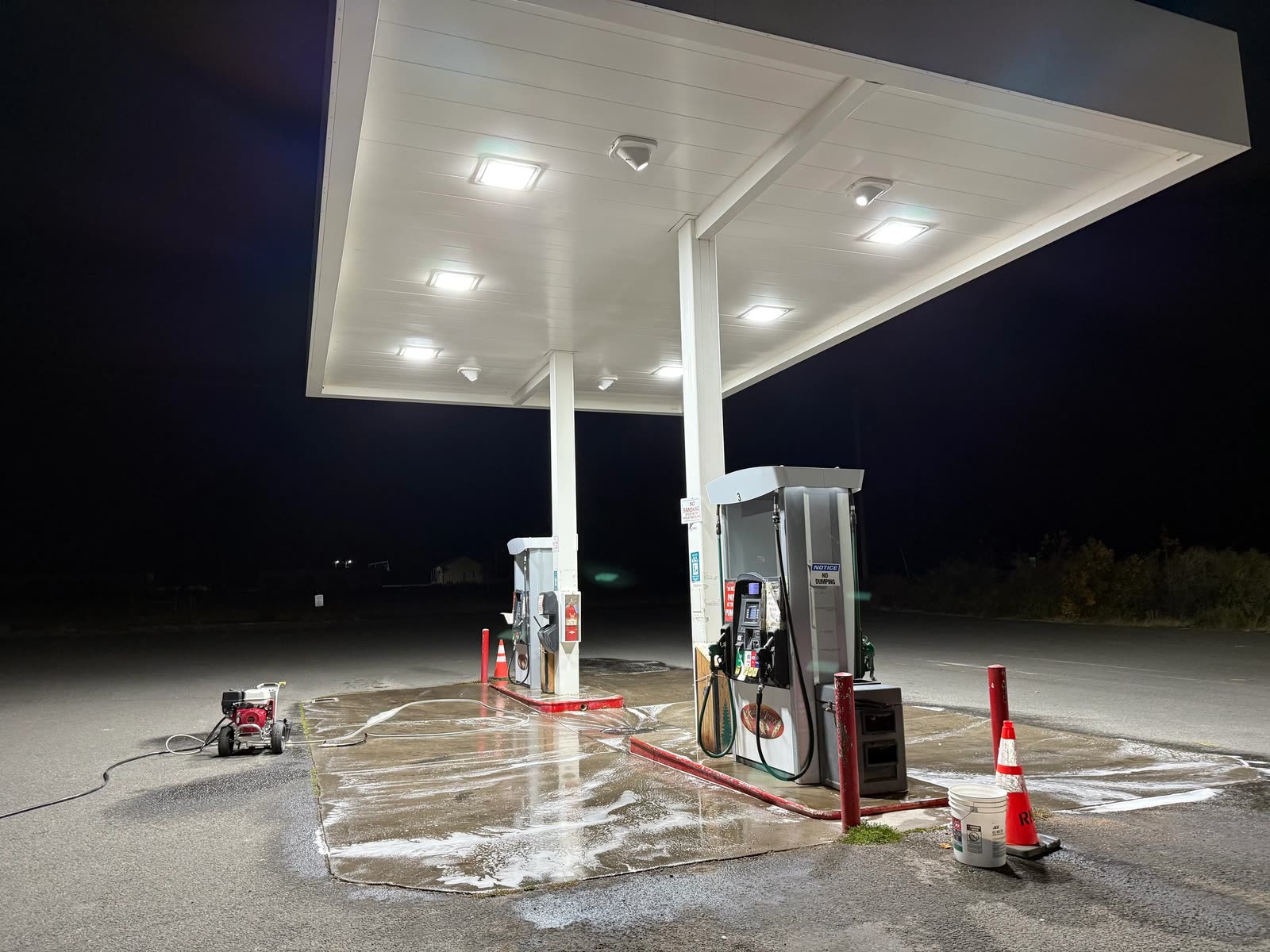
Pressure washing uses more mechanical force and is generally considered for durable surfaces such as selected concrete. Soft washing uses a lower-pressure delivery approach for selected exterior finishes. Neither method is automatically right for every property.
What the assessment should cover
A useful assessment looks beyond the surface name. Material, age, condition, height, openings, fixtures, landscaping, drainage, and nearby finishes all affect the cleaning plan.
- Surface material and condition
- Type and extent of buildup
- Access and building height
- Nearby fixtures, openings, and landscaping
Why mixed properties may use both
A home or commercial property can combine siding, masonry, concrete, painted trim, signs, and other materials. A surface-by-surface plan can use different methods within one project.
At-a-glance comparison
| Decision point | Pressure washing | Soft washing |
|---|---|---|
| Typical starting point | Selected durable hard surfaces | Selected exterior finishes |
| Primary distinction | More mechanical water force | Lower-pressure delivery approach |
| Still requires | Surface and property assessment | Surface and property assessment |
Practical example
A property may use lower pressure on painted siding and a different approach on durable concrete. The shared address does not make the surfaces interchangeable.
Surface considerations
- Material and finish
- Age, repairs, and existing damage
- Openings, fixtures, and adjacent surfaces
- Buildup and runoff path
Preparation checklist
- Photograph every surface type in the requested area
- Point out loose material, leaks, coatings, and repairs
- Describe nearby plants, fixtures, and access limits